

Home • Resources • Becoming a Dog Trainer • How to Become a Dog Trainer: Steps, Costs and Timeline
How to Become a Dog Trainer: Steps, Costs and Timeline
Learn how to become a dog trainer: the 4 steps, costs, timelines, and how a certificate program compares with the CPDT-KA. No license required to start.
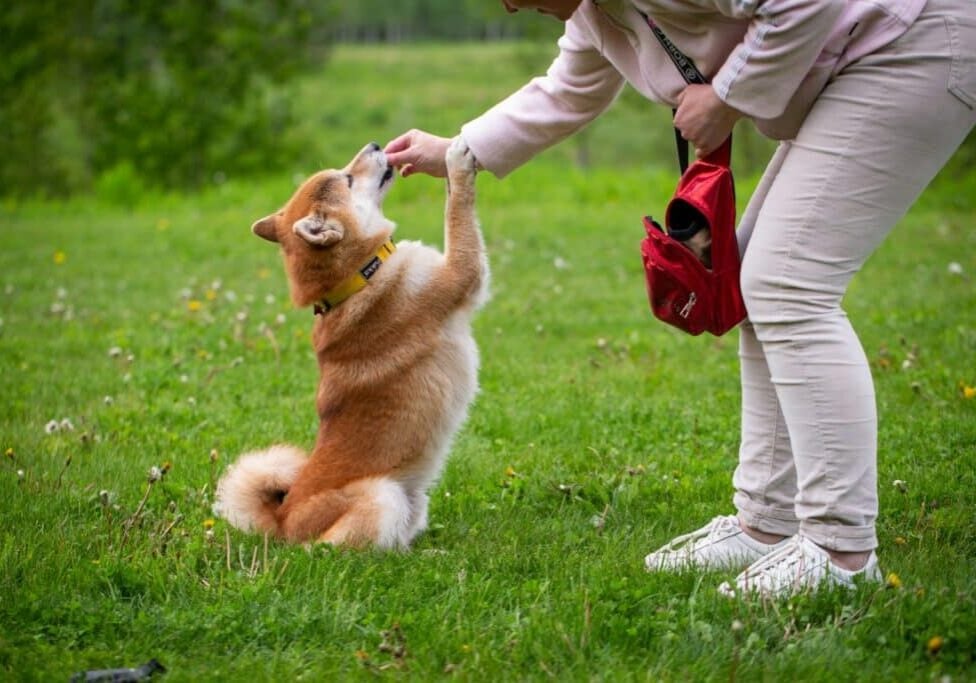
You can become a dog trainer with structured education that teaches how dogs learn, hands-on experience working with dogs, a credential, and a client base. No license is required in the US. A self-paced certificate program, such as NDTA’s, takes about 3 months. The CPDT-KA is an independent credential that also requires 300 logged training hours.
Key takeaways
- No US license is required to work in dog training. A credential is voluntary, but clients, employers, and veterinarians look for it.
- The CPDT-KA asks for 300 hours of dog training in the last 3 years, a signed attestation, and a passing exam score.
- A certificate program lets you start working sooner, with no hours to log first.
- The CPDT-KA exam only runs twice a year, so your timeline depends on which window you aim for.
- The job is teaching people as much as training dogs.
Do you need a license or certification to be a dog trainer?
No. There is no state or federal license for dog trainers in the US, and anyone can offer dog training services. That’s why a credential is important. You can earn a credential by passing an accredited exam, completing a certificate course, or passing an advanced specialization. When a field has no license, clients, employers, and referral partners use credentials to differentiate a professional dog trainer from someone who has trained only their own dogs. Some dog care employers will want to see certificates of completion to verify credentials beyond a simple resume.
The most widely recognized independent credential is the CPDT-KA (Certified Professional Dog Trainer, Knowledge Assessed) from the Certification Council for Professional Dog Trainers (CCPDT). This exam is nationally accredited by the NCCA (National Commission for Certifying Agencies), meaning it meets strict guidelines and standards for exam development. NCCA accreditation is also the standard for respected certifications in other fields, such as personal fitness training, and it verifies the exam is built and run to independent standards. Many schools, and some employers, issue their own certificates upon course completion. Those show you completed that program. An independent, nationally accredited exam shows you met a standard set across the whole field. That gives you two paths into the field. A certificate course lets you start working sooner, without logging hours first. The CPDT-KA takes 300 hours but gives you an independent, accredited credential. Many trainers start with the first and add the second.
Being a certified dog trainer establishes credibility with clients for three reasons. First, it demonstrates you have completed and logged hands-on experience. Three hundred hours of approved dog training experience helps establish trust immediately. Second, passing a knowledge exam shows clients that you have not only met an educational standard, but also made a commitment to the profession. Lastly, the CCPDT requires you to agree to a code of ethics and standards of practice. This code and standard of practice require you to fulfill continuing education, since the credential has to be renewed every 3 years.
What does a dog trainer do?
A dog trainer helps owners change their dog’s behavior and then teaches them how to maintain that behavior and train future behaviors. Most professional dog training happens with the dog and owner together, because the owner lives with the dog after the session ends and continues the training so the new behavior lasts.
Trainers work in many settings:
- Private training in clients’ homes
- Group classes for puppies, manners, or specific skills
- Virtual coaching by video
- Animal shelter and rescue programs that prepare dogs for adoption
- Daycare, boarding and other animal care businesses
- Their own practice: the Bureau of Labor Statistics reports that 39% of animal trainers are self-employed
Some trainers move into a specialty which allows them to expand their services or develop a niche:
- Service dog training prepares dogs to do tasks for people with disabilities.
- Some coach dog sports such as agility or nose work, or prepare dogs and handlers for dog shows.
- Trainers who focus on fear and other complex behavior problems often work alongside behavior consultants and veterinarians.
What a week of dog training work looks like
A typical week mixes training time with other operational activities. A trainer in private practice might conduct eight to fifteen sessions, teach one or two group classes, and spend the rest of the time traveling, writing session notes, creating owner homework plans, responding to clients or following up, and scheduling. Trainers employed by a shelter, daycare, or training business spend more time with dogs and less time running the business. They run more group training sessions, conduct in-facility private training sessions, and sometimes manage play groups.
While spending more time with other dogs may seem ideal, dog trainers often enjoy the freedom to apply their own methodology and systems rather than adhere to those set by an employer. Ultimately, the decision to be an independent or employed dog trainer is based on personal values.
Client demand and availability often affect the hours and daily schedule for professional dog trainers. Evening and weekend sessions are common because they match owner availability and align with times when dogs’ daily problems arise.
What happens in a dog training session?
At NDTA, every session follows the same cycle: Engage. Evaluate. Train. Measure. The trainer engages the dog and owner, evaluates where the behavior currently stands, trains the next step, then measures progress to decide what comes next. Throughout all four stages, the trainer analyzes the dog’s body language and communication as part of reading the dog.
Modern dog training follows a humane, least intrusive approach. The American Veterinary Society of Animal Behavior (AVSAB) recommends reward-based training and advises against aversive methods, such as prong collars, shock collars, leash jerks, and shouting. NDTA opposes these suppression methods. As a future dog training professional, you will be expected to explain your methods and why you chose them. The Humane Hierarchy is a ranked list of behavior-change methods, from least to most intrusive, that guides which method a trainer tries first. LIMA (least intrusive, minimally aversive) is the principle of using the least intrusive, least aversive method that works. Therefore, understanding the Humane Hierarchy and following LIMA (least intrusive, minimally aversive) training guidelines provide a simple decision-making framework clients will welcome and appreciate.
How to become a dog trainer in 4 steps
Here is the path most professional dog trainers follow:
- Learn how dogs learn.
- Get hands-on experience training dogs.
- Earn your credential.
- Build your practice.
The steps overlap. Most future dog trainers begin their learning while growing their experience with dogs. This gives them prerequisite hours to sit for the exam, continue training, and then charge more per training session.
Step 1. Learn how dogs learn
Dog training education starts with learning theory. This information includes how dogs connect events, how consequences change behavior, and how to set up the environment so the dog succeeds. Then, you will learn animal behavior and canine behavior basics, including body language, stress signals, and how breed and early history shape what a dog does. After these foundations, your education progresses to modern training techniques. Modern techniques in dog training include marking and rewarding, shaping, building duration and distance, and adding cues.
These are the learning theory topics every professional dog training program should cover:
- Classical conditioning: how dogs learn that one event predicts another, such as the leash predicting a walk
- Operant conditioning: how consequences make a behavior more or less likely, like offering a treat or play time after the dog sits
- Reinforcement schedules: rewarding every time while a behavior is new, then rewarding intermittently once it is solid
- Generalization: helping a dog respond to a cue in new places, with new people, and around new distractions
- Desensitization and counterconditioning: changing how a dog feels about something it fears, in small steps
Knowing the terms is not enough to be effective at the job. A good training plan uses these concepts to choose what to practice, in what order, at what difficulty level, and how far to advance.
You can learn this from courses, books, seminars, or a mentor. A good course for aspiring dog trainers is:
- Structured, so you aren’t wading through an online sea of overwhelm
- Science-based, with sources you can check
- Mapped to an exam, if a credential and certification is your goal
- Paired with expert advice or mentorship, so you can ask questions about the dogs you work with
- Clear about what hands-on practice it includes or expects
Some programs combine coursework with hands-on assessment, and some offer job placement assistance after you finish. Compare what each program costs, what it teaches, and what you walk away with, then decide whether you need a full program, an exam prep course, or both.
Start your dog training career with NDTA
The Professional Dog Trainer Certificate Program gives you a structured, science-based path into dog training. It is self-paced and designed to take about 3 months, with 12 months of access. You work through 21 chapters, module quizzes, and a 100-question final exam to earn the NDTA Professional Dog Trainer Certificate of Completion.
Step 2. Get hands-on training hours
Knowledge is half of the job. The other half is skill with both dogs and people. This type of skill comes from repeated practice. Good ways to get experience training dogs:
- Volunteer at an animal shelter or rescue, where you can work with many dogs and breeds
- Assist a professional dog trainer with group classes and private sessions
- Look for an apprenticeship with an established trainer
- Work in daycare, boarding, or other animal care roles that include training
Training your own dog builds skill, but those hours do not count toward the CPDT-KA. Check the CCPDT handbook for which activities qualify.
Log your hours as you go, using the CCPDT log format, so you can easily upload your documentation if you apply. You will also need an attestation signed by a CCPDT certificant, a veterinarian, or another approved professional who can confirm your experience, so build those relationships while you study and gain your experience.
Step 3. Earn your credential
To sit for the CPDT-KA you need to:
- Be at least 18 and hold a high school diploma, GED, or equivalent
- Log at least 300 hours of dog training in the last 3 years
- Submit a signed attestation statement
- Agree to the CCPDT Standards of Practice and Code of Ethics
The exam has 200 multiple-choice questions and can be taken at a testing center or online with a remote proctor. It covers four knowledge domains, and your score report breaks results down by domain. Once you pass, you recertify every 3 years by earning continuing education units (CEUs) or retaking the exam.
Many trainers later add the CPDT-KSA (Knowledge and Skills Assessed). It is open to current CPDT-KA holders and is graded from video of you completing assigned training exercises.
Step 4. Build your practice
Once you complete your education or earn your credential, decide how you want to work. You can join an existing business or start your own, and you can work in homes, run classes, coach virtually, or combine all three.
If you start your own practice, cover the basics:
- Liability insurance and a client waiver
- Clear pricing and package options
- A listing in the CCPDT trainers directory once you earn the CPDT-KA, which clients use to find certified trainers
- Referral partners: veterinarians, dog grooming shops, local breeders, shelters, and rescues all meet owners who need help with training
Most trainers in private practice sell training in packages, such as an initial evaluation followed by a set of sessions, rather than one session at a time. Packages give owners time to practice between visits and give you greater opportunity to make a long-lasting change with their dog. Develop your pricing strategy based on the market you will train and the offerings you will provide. For example, look at what other trainers near you charge, then set rates that cover your time, travel, insurance, and the hours you spend outside sessions.
Continue your learning and grow your experience. Completing CEUs keeps your certification active, ensures you stay up to date on emerging dog training methods, and keeps your education level marketable and credible.
How long does it take to become a dog trainer?
A certificate program can take about 3 months. The CPDT-KA path usually takes longer. The biggest factor is how quickly you log your 300 hours, and study time usually runs alongside it.
| Hours of training per week | Time to reach 300 hours |
|---|---|
| 5 | About 14 months |
| 10 | About 7 months |
| 15 | About 5 months |
| 20 | About 3.5 months |
Then plan around the exam calendar. The CPDT-KA is offered in two windows a year. For 2027, applications are due January 13 for the spring window and July 14 for the fall window, with testing from March 6 to 27 and September 4 to 25.
A sample timeline for someone starting this winter:
- Months 1 to 2: Start a course, begin volunteering, set up your hours log
- Months 3 to 9: Log 10 hours a week, keep studying, take a practice test
- Month 7 or later: Apply for the next exam window once your 300 hours are logged and signed
- Exam window: Sit for the exam, then start building your client list
How much does it cost to become a dog trainer?
The exam and practice tests cost a few hundred dollars. Education and business setup make up most of the total, and those vary the most.
| Cost | Typical amount | Notes |
|---|---|---|
| Course or exam prep | NDTA Professional Dog Trainer Certificate Program: $199. Course manual alone: $69 | Varies most; full programs cost more than exam prep |
| CPDT-KA exam fee | $440 (2027) | Non-refundable |
| Late application fee | $100 | Only if you miss the regular deadline |
| Liability insurance | About $300 to $850 per year | Needed once you take clients |
| Professional membership | Optional | Useful for networking and CEUs |
| Recertification | $220 | Every 3 years, plus 36 CEUs |
If you’re trying to decide where to start or what to spend your money on, here is the logical path. You need entry-level education clients can trust. So passing an exam is the biggest thing to overcome. A structured course that gets you exam-ready the first time is important. Retaking the exam means paying the exam fee again and waiting for the next window, so preparing well the first time saves both money and months.
Some costs are easy to miss when you plan. Budget for training equipment such as leashes, harnesses, treat pouches and long lines, travel to clients’ homes, and the time you will spend unpaid while you log hours.
Want to start with the reading?
Essentials of Professional Dog Training is the manual the certificate program is built on. Get the digital edition for $69.
Which dog trainer certification should you get?
For most aspiring dog trainers, a certificate program is the fastest place to start. The CPDT-KA is the most widely recognized independent credential to add once you have 300 hours.
| Credential | What it shows | How you earn it |
|---|---|---|
| CPDT-KA | You meet a field-wide knowledge standard | 300 hours, attestation, 200-question exam |
| CPDT-KSA | You can apply that knowledge with dogs | Hold the CPDT-KA, submit video of assigned exercises |
| School-issued certificate | You completed that school’s program | Finish the program’s coursework and assessments |
| NDTA Professional Dog Trainer Certificate | You completed NDTA’s 21-chapter program and passed its final exam | Finish the course, modular quizzes, and a scenario-based 100-question final exam |
If you want to work with fear, anxiety and other complex cases, a behavior consultant credential is the next level of professional certification. The CCPDT offers the CBCC-KA for that path.
How much do dog trainers make?
The Bureau of Labor Statistics reports a median annual wage of $38,750 for animal trainers in May 2024. That figure covers all animal trainers, not only dog trainers, and it does not capture everyone who runs their own business or works part time. Self-employed dog trainers set their own rates, so income depends on pricing, location, and how many clients you serve.
Compared with other pet careers such as dog grooming or animal care, dog trainer careers let you add services as your skills grow. These include virtual coaching, group classes, and specialty training. That sets them apart from many other trainer careers. The BLS projects 11% growth for animal care and service workers from 2024 to 2034, much faster than average.
What skills does a successful dog trainer need?
A successful dog trainer is as good with people as with dogs, and every professional trainer keeps building these skills for years. The skills that matter most:
- Reading dog behavior. Spotting stress, interest, and readiness to learn, whether in a quiet living room, a busy class, or a dog park.
- Coaching people. Explaining the why behind each step so owners can keep practicing between sessions.
- Applying learning theory on the spot. Adjusting the plan when the dog does something unexpected.
- Patience. With dogs, and with owners who are frustrated and tired.
- Business and communication basics. Scheduling, follow-up, clear pricing and honest progress updates.
Loving dogs is where most people start. But so much of dog training is also educating the dog owner.
Your first week: a starter checklist
- Enroll in a dog training education course.
- Download the CPDT-KA candidate handbook from the CCPDT.
- Set up your hours log.
- Contact two local shelters or rescues about volunteering.
- Ask a local professional dog trainer whether you can assist or observe.
- Pick a target exam window.
- Start learning dog body language this week, by watching dogs and taking notes.
FAQ
How do you become a certified dog trainer?
Complete a dog trainer certificate program, such as NDTA’s Professional Dog Trainer Certificate Program, or log 300 training hours and pass the CPDT-KA exam. Many trainers do both: the certificate program first, then the CPDT-KA.
Can you become a dog trainer with no experience?
Yes. Most trainers start with none. Begin by volunteering at a shelter and studying learning theory, and you will build experience as you log the 300 hours the CPDT-KA requires.
Do you need a degree to be a dog trainer?
No. Most dog trainer jobs and the CPDT-KA require a high school diploma or equivalent, not a college degree.
Can you become a dog trainer online?
You can complete your training online, and you can take the CPDT-KA with a remote proctor. You still need hands-on hours with dogs and their owners.
Is dog training a good career for dog lovers?
It can be, if you also enjoy teaching people. Owners are your students, and their follow-through decides how much the dog changes.
How hard is the CPDT-KA exam?
It is a 200-question multiple-choice exam that covers learning theory, dog behavior and how to teach dogs and their people. Self-taught trainers are often strongest with dogs and least prepared for the learning theory questions, so a structured study plan helps.
How do I become a service dog trainer?
Most service dog trainers start in general dog training, then apprentice with an organization that places assistance dogs. Under the Americans with Disabilities Act, service dogs are not required to be professionally trained or certified, so experience and the organization you train with carry the most weight.
What is the difference between a dog trainer and a behavior consultant?
A dog trainer teaches skills and manners and helps owners change everyday behavior. A behavior consultant works on fear, anxiety and other complex problems, often with a veterinarian. Many behavior consultants start as dog trainers.
Ready to become a dog trainer?
Enroll in the Professional Dog Trainer Certificate Program and work at your own pace. Finish the 21 chapters, module quizzes, and final exam to earn your NDTA Professional Dog Trainer Certificate of Completion. It is also a solid foundation if you plan to sit for the CPDT-KA later.
CPDT-KA®, CPDT-KSA® and CBCC-KA® are registered trademarks of the Certification Council for Professional Dog Trainers (CCPDT). NDTA is not affiliated with or endorsed by the CCPDT.